CSO 100 India Agenda
Explore the latest event agenda below, and check back soon for updates.
Thursday, May 14
The integration of AI into cybercrime has transformed attack vectors. Adversaries deploy generative AI to create deepfakes, hyper-personalized phishing, polymorphic malware, and voice synthesis scams, accelerating both scale and deception. “AI vs AI” will define the next era of cyber defence, forcing organizations to deploy AI-driven threat intelligence and autonomous SOCs (Security Operations Centres).

Cloud adoption continues to outpace governance maturity. This session focuses on mitigating vulnerabilities across multi-cloud, hybrid, and SaaS environments. As enterprises migrate to hybrid and multi-cloud ecosystems, cloud-native attacks have surged. Misconfigured APIs, weak identity governance, and lack of visibility across distributed environments contribute to escalating breach frequency and scale.

A focused discussion on India’s evolving regulatory stack, DPDP Act, CERT-In 2025 directives, and sectoral cyber frameworks, and how 2026 will be the first full year of enforcement convergence.


AI, cloud, and the increasingly interconnected nature of business and technology present CISOs with a range of risks and threats that will be particularly challenging this year. Cybersecurity leaders have a lot to consider when trying to keep their organizations safe. But some things stand out more than others or might be under the radar. The session will decode 5 things CISOs should avoid falling short on in 2026.
As the digital landscape shifts toward autonomous defense and identity-centric security, the mandate of the modern CSO has never been more complex. This keynote explores the critical forces reshaping 2026 from the rise of agentic AI and quantum-readiness to the pressure of global regulatory alignment. Join us to unpack the strategic roadmap for the year ahead and learn how to transform looming disruptions into measurable business resilience.
Beyond managing firewalls and compliance, today’s security leaders serve as the vital infrastructure protecting our global economy and social fabric. This session examines the evolving role of the CSO as a strategic guardian who must navigate geopolitical uncertainty, cyber-physical convergence, and the ethical frontiers of AI. Discover how the most effective leaders are moving beyond the “siloed” defense model to build a culture of collective resilience that secures the future of our modern world.
The CSO 100 Special Awards will recognize 7 security leaders who have successfully implemented Zero Trust Technology across high priority areas.
The CSO 100 Special Awards will recognize 7 security leaders who have successfully implemented Cloud Security across high priority areas.
The CSO 100 Special Awards will recognize 7 security leaders who have successfully implemented Data Security across high priority areas.
The CSO 100 Special Awards will recognize 7 security leaders who have successfully implemented technologies across AI Security.
The CSO 100 Special Awards will recognize 7 security leaders who have successfully implemented technologies across Data Privacy.
The Game Changers Awards will recognize 50 cybersecurity leaders who have used IT innovatively to bolster cybersecurity posture and drive business value at their organization.
Friday, May 15
India’s regulatory ecosystem is converging with global cybersecurity and privacy standards, positioning it as a key regional data-trust hub. The DPDP India Act introducing a comprehensive regime for AI safety, algorithmic transparency, and tech accountability. Together with DPDP and CERT-In mandates, this will create an interoperable, global-grade compliance environment, influencing investment, cross-border data flows, and vendor relationships.
As GenAI tools permeate the enterprise, the CSO role is shifting from a technical gatekeeper to a strategic governor of data ethics and “Shadow AI.” This session invites leaders to benchmark their readiness, discussing how to balance the demand for innovation with the need to contain automated threats. We will map out the transition from a reactive security posture to a proactive, AI-resilient leadership style.
As Generative AI accelerates development cycles, Application Security stands at a critical juncture between enabling speed and ensuring resilience. This session explores the dual reality of AppSec in the AI era: securing AI-generated code and protecting LLM-integrated applications. Join us to map the road ahead, discussing how to evolve your AppSec strategy to withstand the velocity and complexity of next-gen software supply chains.
Companies continue to grapple with a highly complex and active cybersecurity landscape. While AI promises to simplify and improve safeguards, it also opens doors to new risks. As adversaries get more creative and aggressive, security organizations see value in AI as a means to quickly analyze massive datasets, allowing them to more easily pinpoint vulnerabilities and automate threat response. CSO’s 2025 Security Priorities survey confirmed that there is a mounting interest in integrating AI into cybersecurity strategies.
In 2026, the transition from ‘Generative’ to ‘Agentic’ AI has fundamentally shattered the traditional security perimeter. No longer just assistants, autonomous agents are now acting as ‘digital insiders’ executing end-to-end workflows, managing APIs, and making high-stakes decisions with minimal human oversight. This session confronts the nightmare scenario of ‘chained agent manipulation’ and shadow AI sprawl, where a single prompt injection can cascade into an untraceable enterprise-wide breach.
As ransomware evolves into autonomous, multi-vector extortion and deepfakes redefine the landscape of corporate fraud, CSOs face an unprecedented era of digital risk. This session explores the frontline of 2026’s emerging threats from agentic AI “predator swarms” to the weaponization of synthetic media offering strategic blueprints for defense and resilience. Join us to bridge the gap between reactive security and proactive governance, ensuring your organization remains impenetrable in an age of AI orchestrated warfare.
As regulatory complexity outpaces human capacity, the convergence of GRC and AI marks a transition from periodic “box-ticking” to continuous, autonomous assurance. This session examines how 2026’s leaders are deploying agentic AI to monitor controls in real-time, predict compliance drift, and unify fragmented risk data into a single source of truth. Join us to explore how AI-driven governance is moving from a back-office necessity to a frontline driver of enterprise resilience and competitive advantage.
As AI-enabled security tools move from assistive “Copilots” to autonomous “Agents,” the criteria for trust has changed. This session outlines the non-negotiable questions CISOs must ask vendors regarding model transparency, data lineage, and protection against “agentic drift.” We will explore how to vet AI enabled solutions not just for their defensive speed, but for their alignment with emerging 2026 global AI regulations and long-term ROI.
As attack surfaces expand and threats accelerate to machine speed, the traditional SOC is evolving into an autonomous “agentic” ecosystem. This session deconstructs how 2026’s leaders are deploying AI agents that don’t just alert, but independently investigate, triage, and remediate incidents in real-time. Discover how to transition your team from manual responders to strategic AI supervisors, leveraging generative models to bridge the cyber skills gap and achieve sub-minute mean time to response (MTTR).
As India marches toward the “Viksit Bharat 2047” vision, the focus has shifted from mere digital adoption to strategic digital sovereignty. This session explores how 2026’s leading Indian enterprises are moving beyond reactive “firefighting” to build self-healing infrastructures and indigenous AI-driven defense layers. We will analyze the impact of the latest national cybersecurity policies and how a resilience first mindset is safeguarding India’s critical infrastructure from UPI ecosystems to Aadhaar-linked digital identities.
An interactive expert panel unpacking the surge in AI-driven cyber threats, from generative deepfakes to autonomous attack scripts, and how Indian enterprises can leverage AI defensively.





In an era of software-defined factories and agentic AI, the collision of IT and OT ecosystems has created a multi-dimensional attack surface that legacy tools can no longer protect. This session deconstructs the 2026 blueprint for a “unified security fabric,” moving beyond traditional segmentation to autonomous, real-time monitoring across all levels of the Purdue model. We will analyze how to govern non-human identities and secure autonomous model pipelines without disrupting critical production uptime.
As autonomous AI agents become the primary users of enterprise data, the traditional “verify once” model has become obsolete. This session explores the transition to “Zero Trust 2.0,” where identity governance extends to non-human entities and agentic workflows. Learn how to implement continuous, behavioral-based verification that can keep pace with machine-speed transactions, ensuring your “Shadow AI” doesn’t evolve into an unmanaged and untrusted digital workforce.
A leadership-focused CSO panel on the human capital and governance dimension, addressing India’s 30 -50% cybersecurity skills deficit and rising CISO accountability.
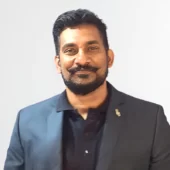
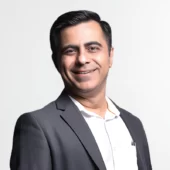




With the 2025 notification of the DPDP Rules, 2026 marks the definitive shift from policy awareness to operational execution. This session deconstructs the phased compliance timeline, focusing on the immediate 2026 milestones for “Significant Data Fiduciaries” and the new requirements for India based Consent Managers. Join us to explore how the Digital First Data Protection Board is beginning to adjudicate breaches and what these first-wave rulings mean for your organization’s privacy roadmap in 2026 and beyond.

The growth momentum of FinTechs in India isn’t slowing down. As cyber threats evolve, FinTech companies are continually adopting next-gen cybersecurity tools and develop strategies to protect their innovation, modernize their Apps and secure their ecosystem. AI is an opportunity as well as roadblock for companies to stay ahead of increasingly sophisticated threats. How will companies prioritize cybersecurity while battling AI landscape to thread the journey in 2026 and beyond?



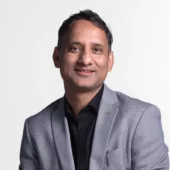

As we look toward 2027, the cybersecurity landscape is being redefined by three tectonic shifts: the rise of autonomous “Agentic AI” warfare, the elevation of Identity as the ultimate sovereign perimeter, and the urgent transition to Quantum-Resilient architectures. This session provides a strategic preview of these mega trends, helping CSOs move beyond 2026’s reactive postures to build future-ready resilience. Join us to deconstruct how these forces will converge to create a “self-healing” enterprise capable of withstanding the machine-speed threats of tomorrow.
By 2026, the CSO has transitioned from a technical advisor to a core executive with the mandate to protect the revenue engine itself. This session explores the “Next-Gen Boardroom Charter,” where security leaders move beyond slides to present quantifiable business loss scenarios and strategic “minimum viability” frameworks. Join us to learn how to wield your new authority to pause high-risk deployments and align security investment directly with the organization’s digital growth and fiduciary obligations.
As the threat landscape accelerates to machine speed, Managed Detection and Response (MDR) has evolved into an “agentic” revolution. This session deconstructs how 2026’s leading providers are moving beyond traditional SOC alerts to deploy autonomous AI agents that independently triage, investigate, and roll back threats in seconds. Join us to explore how this shift from human-led to AI-orchestrated response is closing the “resilience gap” for Indian enterprises facing a new era of automated, multi-vector attacks.
A panel linking privacy, compliance, and trust – essential for India’s ambition to become a global digital hub by 2030.

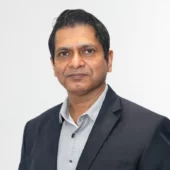



In 2026, the CSO’s mandate has expanded from defending the perimeter to architecting the trust layer for a machine-speed enterprise. This session explores the transformation of the role from a “no-saying” gatekeeper to a strategic partner who enables rapid AI adoption through autonomous governance and agentic risk management. Join us to learn how today’s most successful CSOs are leveraging AI to secure the business while simultaneously driving top-line growth and organizational resilience.
CISOs are transitioning from technical guardians to strategic leaders with personal legal accountability for cybersecurity disclosures and governance. Global and domestic regulations now expose CISOs to civil or even criminal penalties for inaccurate incident reporting or compliance failures.
As adversaries weaponize AI to bypass traditional controls, the convergence of AI/ML and Zero Trust has become the cornerstone of a resilient defense strategy. This roundtable explores how to leverage machine learning to automate threat detection while enforcing strict, continuous verification protocols. Join your peers to discuss practical roadmaps for building an adaptive security architecture that stays ahead of this volatile risk landscape.
There is no shortage of theories on data security, but real-world implementation is where the challenges lie. In this candid roundtable, we will strip away the hype to discuss the concrete “Dos and Don’ts” of overhauling a security framework in a live enterprise environment. Exchange insights with your peers on what actually works and what doesn’t when aligning security initiatives with rapid business transformation.
The Hall of Fame awards will recognize CSOs who have received the CSO 100 award for 3 or more consecutive years while serving at the same organisation.
The Fearless 100 awards will recognize 100 CSOs & CISOs for outstanding leadership & Innovation.
Saturday, May 16
Traditional monitoring can no longer keep pace with the volume of modern threats. This roundtable brings together India’s top security leaders to discuss how the SIEM market is shifting toward smarter, faster systems of action focusing on how to cut through the noise of ‘alert fatigue’ to achieve true machine-speed response.
This session explores the convergence of SIEM, XDR, and Data Lakes to eliminate silos and accelerate investigations. Focused on India’s data sovereignty laws, we will discuss balancing high-speed ingestion with cost-effective retention. By fusing human intuition with automation, we aim to redefine MTTD and MTTR benchmarks for 2026.
As the DPDP Act moves into its first full year of active enforcement, the grace period for ‘intent’ has ended, and the era of ‘evidence’ has begun. This roundtable brings together India’s top security leaders to discuss the 2026 reality of operationalizing 72-hour breach reporting, managing the ‘Consent Manager’ ecosystem, and navigating the boardroom’s heightened accountability for data fiduciaries. Join your peers to evaluate how these mandates are reshaping enterprise risk, vendor ecosystems, and the very definition of digital trust in a post-compliance landscape.
In an era of rising digital protectionism, navigating the patchwork of global data sovereignty laws from GDPR to emerging local mandates is a defining challenge for modern CSOs. This session brings together senior editors to dissect the collision between cross border business needs and increasingly strict localization requirements.
As AI evolves from a tool to the backbone of the Indian enterprise, the cybersecurity talent gap has become a critical business risk. This session provides a strategic roadmap for CISOs to bridge the 43% supply gap in AI-centric security roles by transitioning from traditional IT skillsets to MLOps and automated defense proficiencies. Attendees will learn how to architect a “Precision-First” workforce that balances autonomous AI tools with essential human intuition.
As organizations rapidly adopt generative AI, the rise of Shadow AI unsanctioned AI tools used by employees has created a new, invisible attack surface within the software pipeline. This session explores how to integrate AI governance into DevSecOps to move from reactive blocking to “Secure-by-Design” enablement. Security leaders will gain a practical framework for identifying hidden AI dependencies and automating guardrails without stifling developer innovation.
As the 2026 threat landscape becomes increasingly fragmented, traditional network security must evolve into a unified, Zero-Trust-based compliance engine. This session provides a strategic framework for synchronizing network defense with India’s evolving regulatory landscape, including the DPDP Act. Security leaders will leave with a roadmap for automating continuous compliance while securing the borderless enterprise of tomorrow.
The modern CSO is no longer just a “guardian of the gate” but a primary architect of business value. This session deconstructs the 2026 paradox: how to empower the business to deploy autonomous AI agents while maintaining an ironclad risk posture. Learn how top-performing CSOs are moving from “No” to “How,” using AI-driven governance to turn security from a friction point into a competitive accelerator that enables rapid, safe innovation.
In 2026, the question is no longer “what the law says,” but “can your systems prove it?” This session analyzes the technical hurdles DPOs face in implementing automated data erasure, purpose limitation, and the mandatory one-year log retention required under the 2025 Rules. We will examine the emerging role of India-based Consent Managers and provide a strategic roadmap for CSOs to ensure that compliance doesn’t become a bottleneck for digital innovation and AI adoption.